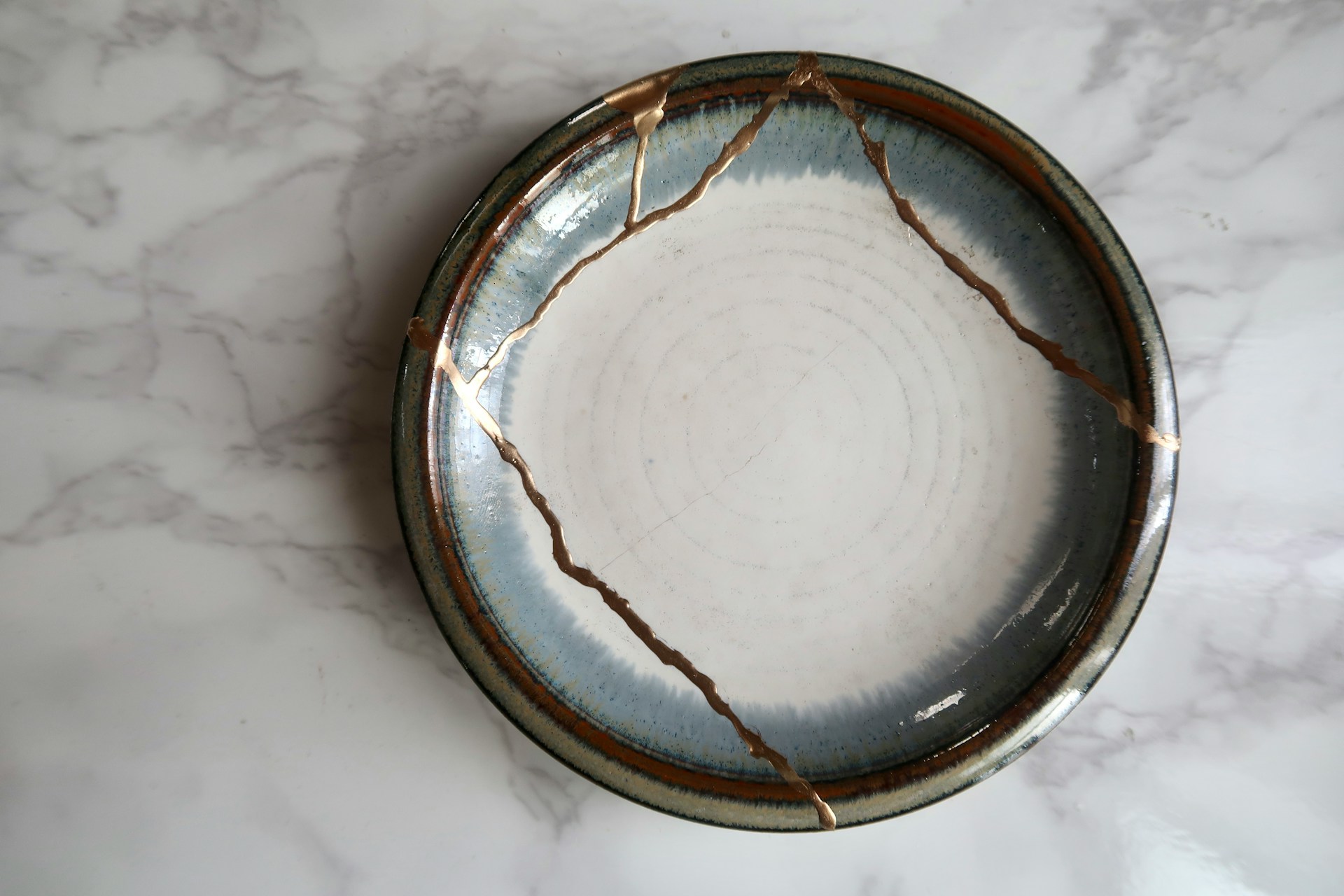
In a world often focused on perfection and the new, the ancient Japanese art of Kintsugi offers a powerful counter-narrative. This unique repair technique transforms broken ceramics into objects of greater beauty and significance, celebrating flaws as part of an item’s history rather than something to conceal. Kintsugi is not merely a method of restoration—it is a philosophy that resonates deeply in modern times, inviting us to embrace imperfection, honor resilience, and find beauty in the incomplete.
The Philosophy of Imperfection in Japanese Kintsugi
Kintsugi is a traditional Japanese technique for repairing broken ceramics and pottery. By using “urushi” (lacquer) to bond the broken pieces and adorning the repaired areas with gold or silver powder, this method transforms the damage into a distinctive beauty. Kintsugi is not merely about fixing an object but about embracing the broken parts as a story worth preserving. This philosophy embodies the Japanese aesthetic and worldview, emphasizing the beauty of imperfection.
In recent years, Kintsugi has garnered attention not only in Japan but across the globe. This growing interest is deeply connected to modern values and societal trends.
A Message from Kintsugi: New Value in Broken Things
Kintsugi teaches us that “broken things do not lose their value; they gain new meaning.” This idea is not limited to physical objects but extends to human relationships and individual lives. The global interest in Kintsugi lies not only in its techniques and visual appeal but also in its ability to offer inner healing and a sense of hope.
The Origins and History of Kintsugi
The history of Kintsugi dates back thousands of years, with evidence of lacquer being used to repair pottery during Japan’s Jomon period. At the time, repairs were primarily functional. However, during the Muromachi period (14th–16th centuries), the art of Kintsugi as we know it today emerged within the tea culture, incorporating gold and silver powder to embellish repaired areas.
This approach, which emphasizes the value of the object’s history and highlights its imperfections, aligns with the Japanese “wabi-sabi” aesthetic. The philosophy continues to inspire and move people even in the modern era.
The Technique and Process of Kintsugi
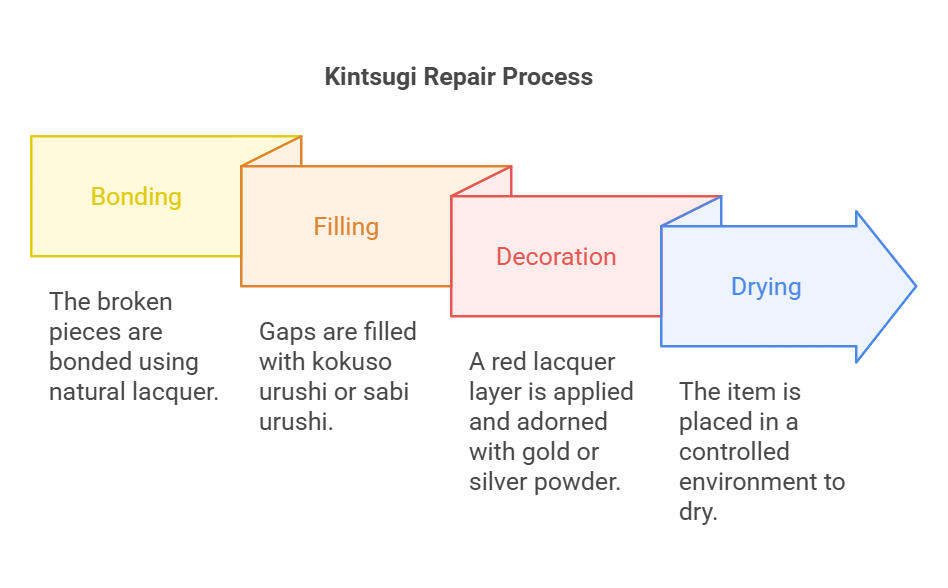
Kintsugi involves several meticulous steps to achieve its beautiful results:
- Bonding
The broken pieces are carefully bonded using natural lacquer, a sap extracted from trees known for its strong adhesive properties. - Filling
Gaps and missing fragments are filled with “kokuso urushi,” a putty made of lacquer and wood powder. In some cases, “sabi urushi,” a mix of lacquer and fine stone powder, is used to smooth the surface. - Decoration
A red lacquer layer is applied to the repaired areas, which are then adorned with gold or silver powder. This highlights the cracks as part of the object’s new identity. - Drying
The repaired item is placed in a controlled environment with 70% humidity and a temperature of 20–25°C to allow the lacquer to dry. This process can take several weeks to complete.
Types of Kintsugi
Kintsugi can be broadly categorized into two methods:
- Hon Kintsugi (Traditional Kintsugi)
This method uses natural lacquer and gold powder, creating a durable and food-safe finish. Although time-consuming and labor-intensive, it results in a highly artistic and enduring repair. - Simplified Kintsugi
Using synthetic resins, this method is quicker and easier, making it accessible for beginners. It is ideal for repairing decorative items such as plates and ornaments.
What Kintsugi Teaches Us
Kintsugi is not just a repair technique but a philosophy that encourages us to cherish and appreciate the value of imperfections. By emphasizing the cracks and damages, it creates a unique beauty in each piece, symbolizing the depth of Japanese culture.
Spending time with a broken object during the Kintsugi process also allows us to reflect on ourselves. This quiet and contemplative practice offers a chance to connect with our inner world. Through Kintsugi, you can embark on a journey into Japanese tradition and aesthetics, discovering a new way to appreciate the beauty of imperfection.

コメント