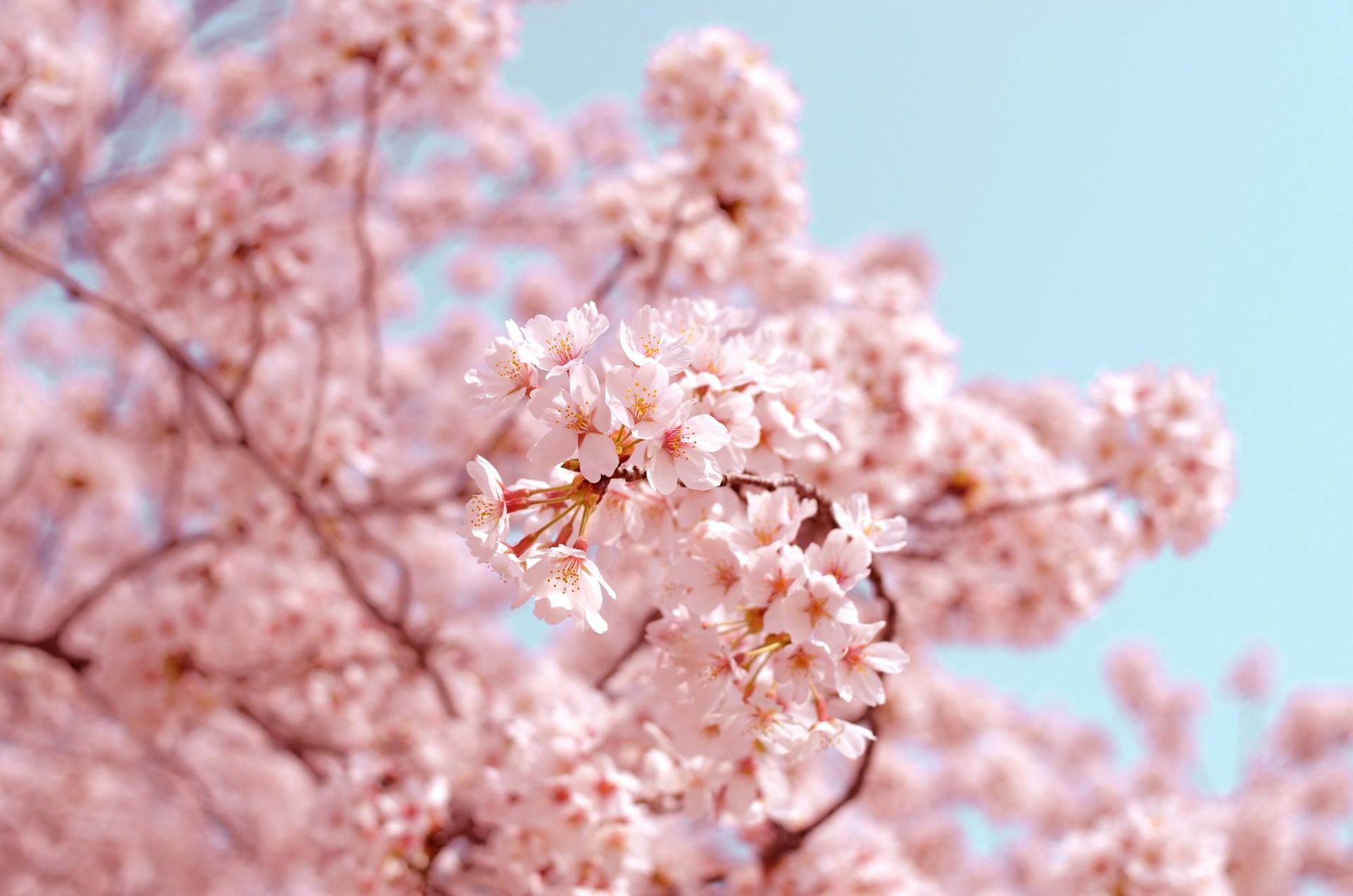
Sakura (cherry blossoms) is a powerful symbol of Japanese culture, representing beauty and transience. Its significance lies in its deep historical roots and the cultural and spiritual evolution it has undergone. This article explores why sakura holds a special place in Japanese hearts by tracing its history from ancient times to the present day.
Sakura in Ancient Times (Before the 8th Century)
In ancient Japan, sakura was closely associated with agriculture as a symbol of life and rebirth. The word “sakura” is said to originate from “sa,” referring to the spirits of rice paddies, and “kura,” meaning their dwelling place. It was believed that mountain deities descended with the blooming of sakura to protect rice planting as the spirits of the fields. Sakura’s blossoming marked the start of the planting season, while rituals of gratitude were held after harvest, symbolizing the return of the deities to the mountains.
During this period, sakura represented “blooming flowers” rather than “falling petals.” The strong connection between nature and human life made sakura a symbol of prosperity and renewal.
The Appearance of “Falling Sakura” in the Heian Period (794–1185)
The Heian Period saw the emergence of Japan’s unique court culture, and with it, sakura began to symbolize the impermanence of life. Poems from this era frequently depicted “falling sakura” as a metaphor for life’s transience. Two examples from the Kokin Wakashu (Collection of Ancient and Modern Poems) illustrate this shift:
- Ono no Komachi
“The colors of the flowers fade away while I idly watch the passing days in sorrow.” - Zokuhoshi
“Oh, cherry blossoms, let me fall with you; it is better to fade away while still at one’s prime.”
These poems connect the falling petals of sakura with the impermanence of life and even death. Similarly, The Tale of Genji by Murasaki Shikibu uses sakura as a recurring motif, with the term “aware” (a sense of deep emotional resonance) appearing over 1,000 times to evoke feelings of beauty and ephemerality.
The Spread of Hanami Culture in the Edo Period (1603–1868)
In the Edo Period, sakura became deeply ingrained in the daily lives of ordinary people. The Tokugawa shogunate created famous sakura-viewing spots such as Mukojima and Ueno, establishing the tradition of hanami (flower viewing). This marked the cultural shift of sakura as a symbol of life’s celebration, beauty, and vibrancy.
During this time, sakura was regarded as a symbol of Japan’s cultural identity and became a unifying motif for the entire nation. At the same time, sakura began to take on a more personal and spiritual meaning, allowing individuals to relate their lives to the fleeting beauty of the blossoms.
“Falling Sakura” as a National Symbol in the Meiji Period (1868–1912)
The Meiji Period saw sakura being used as a symbol of nationalism and military ideology. As the government sought to modernize Japan and strengthen its military, sakura was tied to the idea of yamato-damashii (the Japanese spirit) and the noble sacrifice of falling for one’s country.
Sakura in Military Context
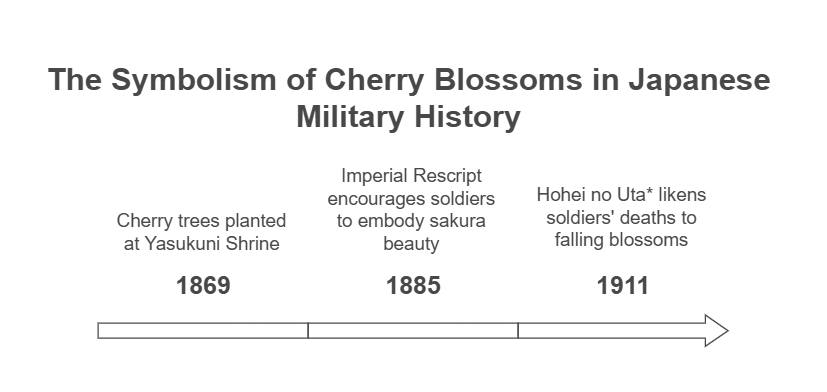
- 1869: Cherry trees were planted at Yasukuni Shrine, which commemorates those who died in service to the nation.
- 1885: The Imperial Rescript to Soldiers and Sailors encouraged soldiers to embody the “beauty of falling like sakura.”
- 1911: The song Hohei no Uta (The Infantry Song) likened soldiers’ deaths to the falling of cherry blossoms.
Sakura in Education
- Textbooks and songs began to incorporate sakura to instill the values of self-sacrifice and loyalty to the emperor. For example, the 1887 kindergarten songbook featured lyrics such as:
“Even if the cherry blossoms fall, let it be for the sake of our lord.”
Through these efforts, sakura became ideologically associated with the state and the emperor, representing an idealized form of patriotism and beauty.
Sakura in Modern Times
In modern Japan, sakura symbolizes the arrival of spring, renewal, and new beginnings. Cherry blossoms are closely associated with life’s milestones, such as graduations and school admissions. The fleeting nature of the blooms also continues to remind people of the impermanence of life and the importance of cherishing the present moment.
On a global scale, sakura has become a symbol of Japanese culture and international goodwill. The 1912 gift of sakura trees to Washington, D.C., remains a celebrated example, with the annual Cherry Blossom Festival attracting millions of visitors worldwide.
Experiencing Sakura in Japanese Culture
The best way to understand the cultural significance of sakura is to experience it firsthand. Here are some traditional and modern ways to enjoy cherry blossoms:
- Hanami (Flower Viewing): Visit famous cherry blossom spots and enjoy picnics under the blooming trees.
- Writing Haiku: Capture the beauty and transience of sakura in a short poem.
- Crafts and Cuisine: Explore sakura-inspired pottery, fabrics, and seasonal foods like sakura mochi and sakura tea.
Sakura is more than just a flower in Japan—it is a profound cultural symbol of life, death, and rebirth. Understanding its historical and cultural significance provides insight into the Japanese spirit and worldview. Whether you visit Japan or participate in cherry blossom festivals abroad, you can appreciate the universal beauty and meaning of sakura.

Comments