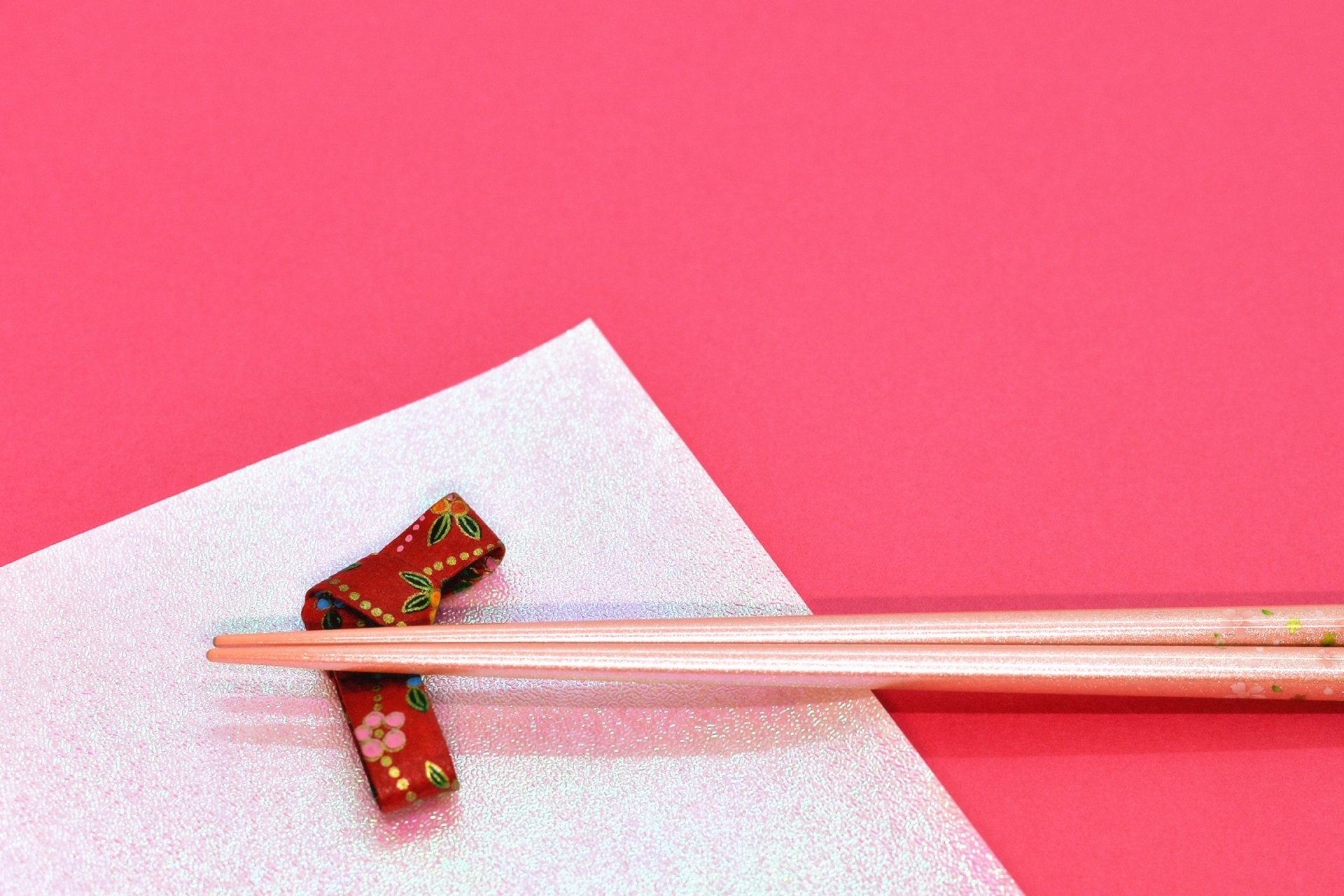
Amid a world captivated by fast-paced modernity, Wajima-nuri stands as a testament to enduring tradition and meticulous craftsmanship. This ancient Japanese lacquerware, born over a millennium ago in the tranquil town of Wajima, is more than an art form—it is a reflection of resilience and cultural identity. Each piece tells a story of nature’s gifts and human dedication, with layers of urushi lacquer and intricate designs that grow ever more beautiful with time. Wajima-nuri invites us to appreciate the harmony of function and artistry, the patience in creation, and the legacy of a craft that transcends generations.
What is Wajima-nuri?
Wajima-nuri, or Wajima lacquerware, is a traditional Japanese craft with over 1,000 years of history. Originating from Wajima City on the Noto Peninsula in Ishikawa Prefecture, this art is widely recognized for its exceptional durability, intricate designs, and outstanding craftsmanship.
Wajima-nuri is made primarily using natural materials, undergoing meticulous processes to achieve its distinctive beauty and durability. At its core lies urushi, a natural lacquer derived from the sap of the urushi tree. This lacquer is applied in multiple layers to produce a smooth, glossy finish.
Another essential component is jinoko, a finely ground diatomaceous earth unique to the Wajima region. Jinoko is mixed with urushi to reinforce the wooden base and ensure the lacquer adheres firmly. This combination of local materials and traditional techniques creates Wajima-nuri as a masterpiece of functionality and artistry.
The Process of Making Wajima-nuri:Production Steps
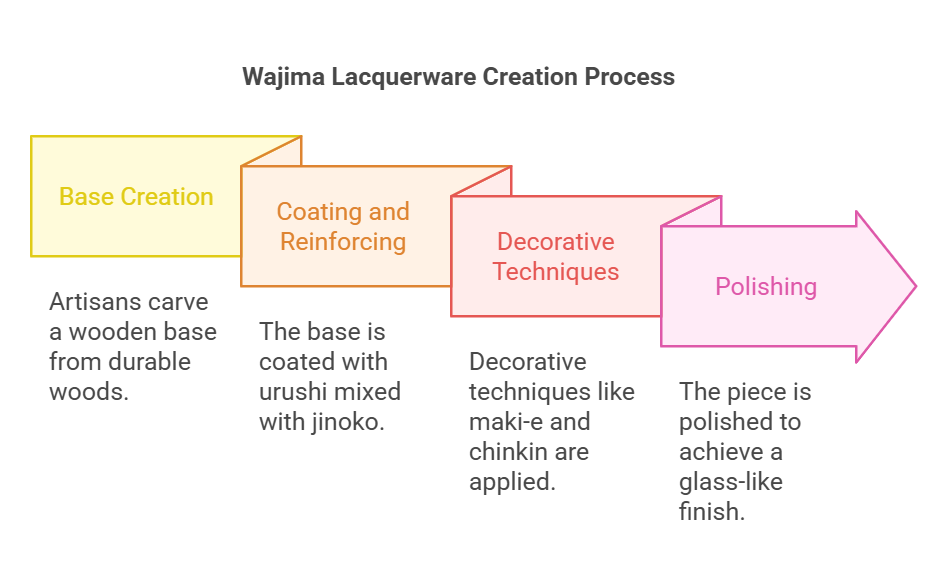
Creating a single piece of Wajima lacquerware involves a series of steps, often taking months or even years to complete. Key stages include:
- Base Creation: Skilled artisans carve the wooden base, often using durable woods like zelkova or cypress.
- Coating and Reinforcing: The base is coated with urushi mixed with jinoko, forming a strong foundation.
- Decorative Techniques: Techniques such as maki-e (designs created with gold or silver powder) and chinkin (engraved patterns filled with gold) are used to embellish the surface.
- Polishing: After applying multiple layers of lacquer, the piece is polished to achieve a radiant, glass-like finish.
Cultural Significance and Background
Wajima-nuri is not merely tableware or decorative art but a representation of Japanese aesthetics and craftsmanship. Each piece reflects the harmony between functionality and beauty, making it a popular choice for ceremonies, gifts, and home decor. In 1977, Wajima-nuri was designated as a National Important Intangible Cultural Property, highlighting its contribution to Japanese heritage and culture.
While deeply rooted in tradition, Wajima-nuri continues to evolve. Modern artisans integrate contemporary designs and applications, ensuring this ancient craft remains relevant today. From elegant plates and bowls to accessories, Wajima-nuri showcases the timeless charm of Japanese artistry.
The Impact of the 2024 Earthquake
In 2024, Wajima City was struck by a devastating earthquake registering a magnitude of 7, accompanied by liquefaction and subsequent fires, which caused widespread destruction throughout the region. Many homes and public facilities were severely damaged, and some Wajima-nuri workshops were impacted. Among the hardest hit was the iconic Morning Market (Asaichi), a symbol of the community and a key tourist attraction, which suffered catastrophic damage.
The Morning Market, a traditional marketplace with roots dating back to around the 800s (late Nara to early Heian period), initially began as a gathering for worship at the Hotohira Shrine. Over time, it evolved from a “living market” into a “tourist market.” This historic market, cultivated over centuries, flourished as a hub where sellers and buyers interacted personally. Despite the earthquake’s destruction, recovery efforts are underway, and artisans continue their commitment to preserving the craft of Wajima-nuri, ensuring its traditions endure for future generations.
Challenges Facing the Wajima Region
Wajima City, blessed with rich natural beauty and cultural heritage, faces significant challenges due to its poor accessibility. The recovery from the earthquake has also been hindered by limited transportation options, which have deterred the participation of volunteers. There are no direct railway connections to the area, and public transportation is insufficient, making it difficult for tourists and enthusiasts to visit.
This lack of convenient transportation impacts not only tourism but also the local economy and population retention. The resulting decline in younger residents has exacerbated issues such as a shortage of skilled artisans and rural depopulation. Addressing these challenges requires improvements in transportation infrastructure and enhanced regional promotion.
Additionally, the earthquake’s aftermath, including decreased tourism and disruptions in logistics, has significantly impacted the regional economy. To overcome these difficulties, residents and local authorities are collaborating on reconstruction plans and initiatives to revive global interest in Wajima-nuri.

Comments